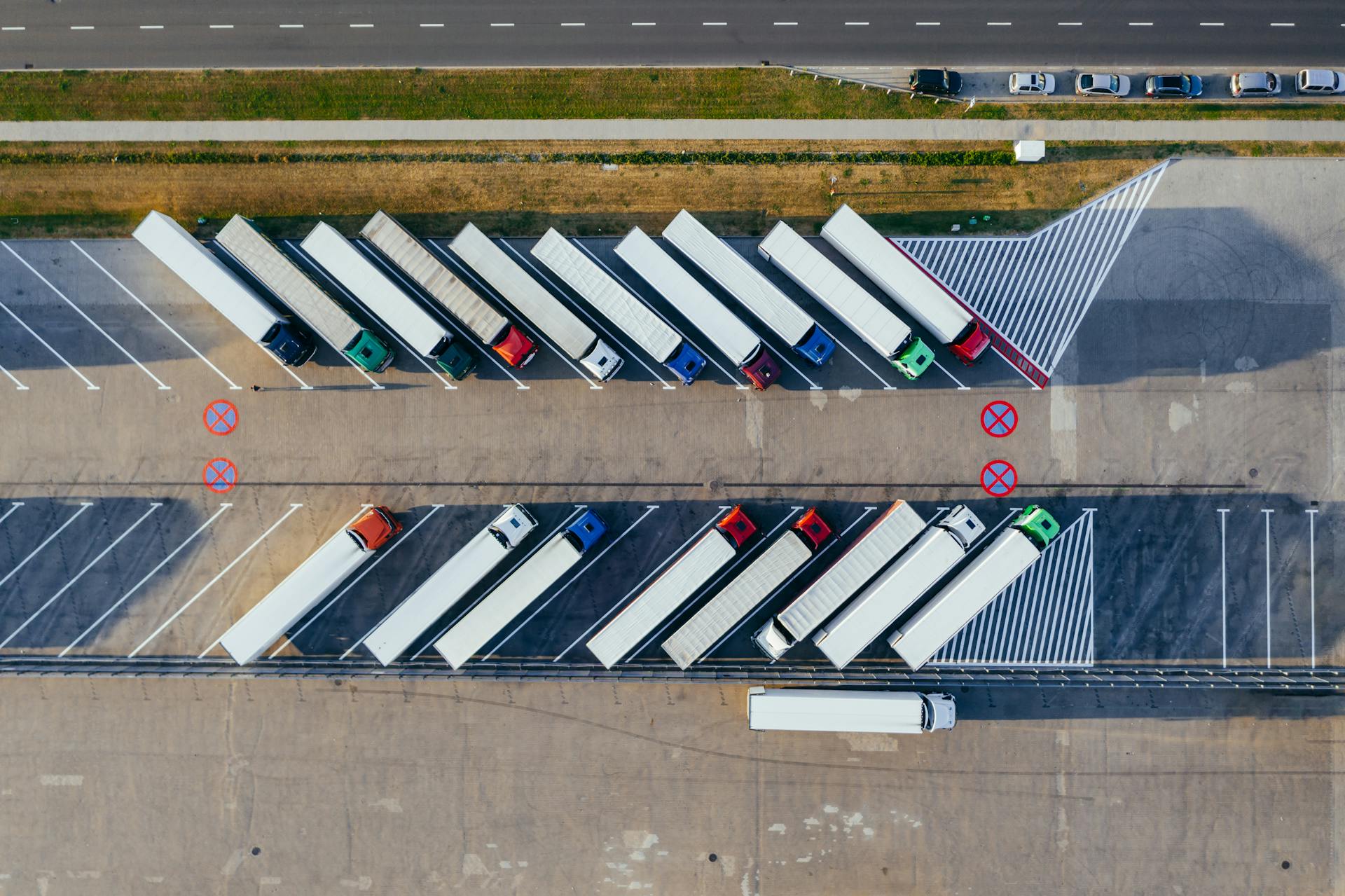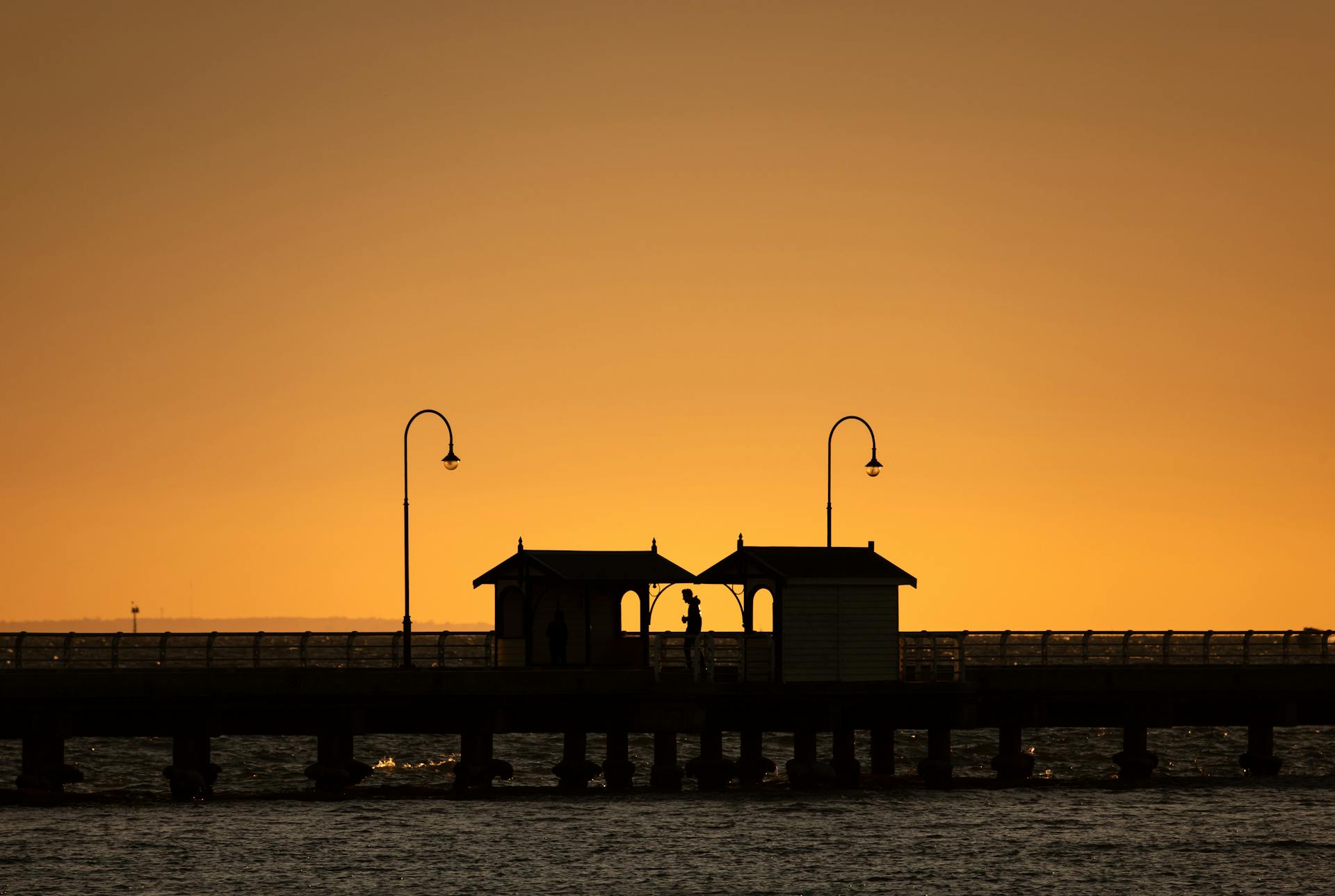
The Victorian Ports Corporation (Melbourne) is embarking on a new era of growth and development. This is driven by the Victorian Government's commitment to investing in the state's ports infrastructure.
The corporation's vision is to create a world-class port system that supports the growth of Victoria's economy. This includes investing in new infrastructure and technology to improve efficiency and reduce costs.
The port's strategic location on the Yarra River makes it an ideal hub for trade and commerce. It's a vital link between the city and the surrounding region.
The Victorian Ports Corporation (Melbourne) is well-positioned to take advantage of the growing demand for trade and logistics services. This is an exciting time for the corporation and the city of Melbourne.
Consider reading: Port of Redwood City
History of VPC
In mid-2015, the government of Premier Daniel Andrews announced that the Port of Melbourne would be leased to a private operator.
The government remained the landowner, and the lease was finalized in 2016 for an upfront payment of A$9,700,000,000.
Rachel Johnson, formerly of Transport for NSW, was appointed as the inaugural chief executive officer of the Victorian Ports Corporation (Melbourne) in 2016.
She reported to the Port of Melbourne Corporation until it was privatised, and a board of directors was appointed in November of the same year.
The establishment of Transport for Victoria in mid-2017 made VPCM one of its subsidiary agencies.
A review of the Victorian port system in 2020 examined the role of VPCM, and in March 2021, the state government announced that VPCM would be merged with the Victorian Regional Channels Authority into a new agency, Ports Victoria.
Broaden your view: Alaska Car Transport Tacoma Port
Early Years
The early years of VPC were marked by innovation and experimentation. VPC was first introduced in the 1960s as a virtualization technology for mainframe computers.
It was initially met with skepticism by some in the industry, who questioned its feasibility and practicality.
Key Milestones
The history of Virtual Private Cloud (VPC) is a fascinating story. It all began in 2006 with the launch of Amazon Web Services (AWS), which introduced the concept of VPC to the world.
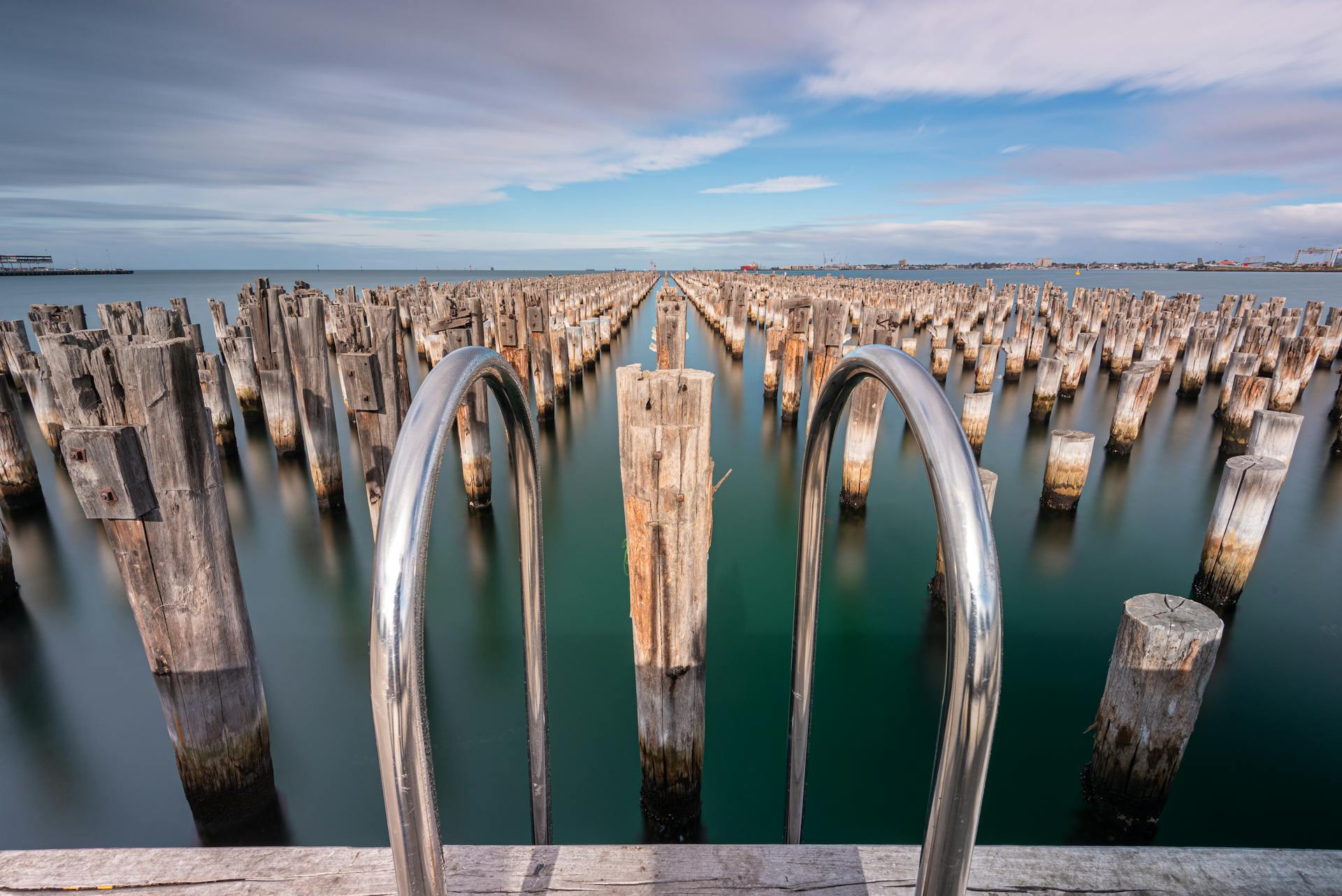
The first major milestone was the release of Amazon Virtual Private Cloud (VPC) in 2009, allowing users to create a virtual network in the cloud.
In 2010, AWS launched the VPC peering feature, enabling users to connect multiple VPCs and resources in a secure and isolated manner.
Amazon Web Services (AWS) continued to innovate and improve VPC, releasing the VPC Flow Logs feature in 2013, which provided detailed information about network traffic.
By 2015, VPC had become a fundamental component of AWS, with millions of users worldwide.
Port Operations
The Victorian Ports Corporation (Melbourne) plays a crucial role in the state's economy, handling over 4,000 ship movements per year.
The corporation operates several ports, including the Port of Melbourne, which is the largest container port in Australia. It also manages the Outer Harbour and the Webb Dock.
The Port of Melbourne is a major cargo hub, with over 2.5 million containers passing through it annually.
Local Ports and Services
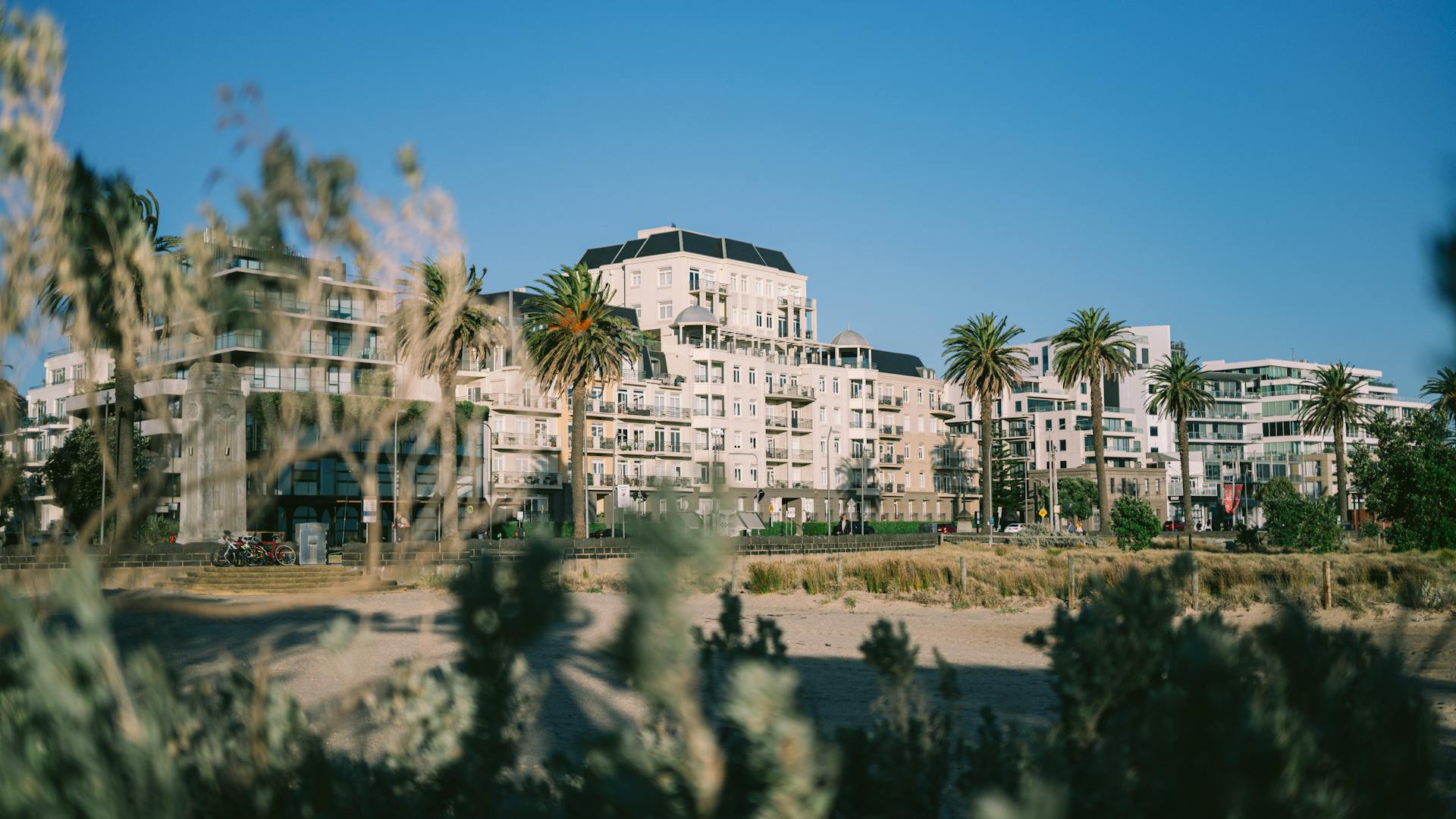
Pilotage and towage services are essential for safe and efficient vessel operations in Victoria's ports.
Ports Victoria should be responsible for ensuring that these services are available for vessels, which would include a non-exclusive-licensing system.
For the most part, Victoria's local ports don't need significant changes.
However, Corner Inlet is already handling large commercial vessels, including off-shore oil and gas and Bass Strait traffic.
If a major project is approved, Corner Inlet could be declared a commercial trading port, triggering a review of its management arrangements and the creation of a Port Development Strategy.
New CEO Appointed
Brendan Webb has been appointed as the inaugural Chief Executive Officer for Ports Victoria, bringing over two decades of experience in operational leadership roles across transport, logistics, engineering, and mining.
He was most recently the General Manager of Trade and Operations at the North Queensland Bulk Ports Corporation, where he led through significant change and oversaw all commercial operations.

Ports Victoria began operating on 1 July and is based in Geelong, recognizing the city's important role in Victoria's ports system.
Approximately $26 billion of locally produced and manufactured exports pass through Victoria's commercial ports annually, handling almost a quarter of Australia's total food and fibre exports.
Freight volumes are expected to more than double over the next thirty years, making safe and efficient port operation crucial for Victoria's economic growth.
The establishment of Ports Victoria was a key finding from the Independent Review of the Victorian Ports System, which aimed to cut red tape, boost safety, and improve the operation of the industry.
Frequently Asked Questions
Where do container ships dock in Melbourne?
Container ships dock at the port of Melbourne, specifically at one of its 3 international container terminals located at the north of Port Phillip.
Where do you board a cruise ship in Melbourne?
To board a cruise ship in Melbourne, head to Station Pier in Port Melbourne, where you can view the ships from the West Finger Pier. For more information, see our Visiting Station Pier page.
Who owns the ports in Melbourne?
The Port of Melbourne is owned by a consortium of shareholders with global expertise in delivering world-class port facilities and services. The port's operations are managed by tenants, not employees of the Port of Melbourne.
Sources
- https://en.wikipedia.org/wiki/Victorian_Ports_Corporation_(Melbourne)
- https://ports.vic.gov.au/about-us/history/history-of-port-of-melbourne/
- https://researchdata.edu.au/victorian-ports-corporation-melbourne/939251
- https://www.shippingaustralia.com.au/victorian-ports-shake-up-following-independent-review/
- https://www.premier.vic.gov.au/new-ports-victoria-ceo-appointed
Featured Images: pexels.com